Most checklists from the big wedding sites assume one ceremony and one party on one day. WithJoy, Zola, and The Knot all publish good month-by-month lists, and they are worth reading. But a Desi wedding in New Jersey, Toronto, Leicester, or Frankfurt is usually three to five festivities over a weekend, with two families adding names, vendors who need to understand a mandap and a baraat, and grandparents flying in from Delhi, Lahore, or Dhaka.
This checklist keeps the Western logistics (venue contracts, hotel blocks, marriage licenses, RSVP deadlines) and adds the parts that are specific to South Asian weddings. It is organized in seven phases, from more than a year out to the week of the wedding. Inside each phase, tasks are grouped by festivity or by who owns them.
If you have about a year, work down the page. If you have less than six months, book the venue, catering, the priest or officiant, the photographer, and the outfits first, and start any visa paperwork today.
Before the timeline: four decisions that shape everything
In a r/DesiWeddings thread asking for a checklist, one of the top replies was not a list of vendors. It was a list of conversations to have first, as a couple, before the families get involved. The same four decisions come up in The Knot's Indian wedding planning guide, which says to finalize the number of events and the type of wedding before anything else.
- Which festivities, and where. Mehndi, sangeet, haldi, the ceremony, and the reception are common, but none are compulsory. Decide which you are hosting, whether any are merged, and which city or venue each one is in.
- The budget, and who pays for what. In many families, each side pays for certain festivities. Write it down per festivity, not as one big number.
- A guest count for each festivity. A haldi might be thirty people, the reception three hundred. Venues, catering, and hotel blocks all depend on these numbers.
- The date, and how much lead time you have. Peak-season weekends, a muhurat, and visa timelines for overseas relatives all narrow the options.
Once those are agreed, the rest of the checklist is mostly booking and confirming. For money split by festivity, with a share for each family, see how to budget a multi-event wedding. For choosing and ordering the festivities across the weekend, see Indian wedding events in order.
12+ months out: decide the shape of the wedding
This is the phase where the couple and both families agree on what kind of wedding this is. Most of the expensive mistakes in a Desi wedding come from skipping these conversations and booking a venue first.
Couple and families
- Talk as a couple before involving the families: which city hosts which festivities, how you will blend two sets of traditions, a rough guest count, and who pays for what. A popular r/DesiWeddings checklist thread recommends exactly this order, and only then bringing parents into the decisions.
- Agree the total budget, and write down which family or the couple is paying for each festivity. Include outfits, jewellery, travel, hotel rooms you are covering, and a cushion for surprises.
- List the festivities you are actually hosting: roka or engagement, mehndi, sangeet, haldi, the ceremony with baraat and milni, and the reception. Drop or merge any you do not want before anyone books anything.
- Pick a date or a short list of dates. If your family follows a muhurat, ask the priest or pandit for several auspicious options so you have room to match venue availability.
- Decide on religious and civil ceremony plans. In the US, Canada, the UK, and most of Europe, the religious ceremony and the legal marriage are separate steps, so note what your state, province, or country requires and when.
Guests
- Start one master guest list with both sides on it, and mark which festivities each person is invited to. Decide early who has the final say on extra names.
- Flag guests who will travel internationally, and especially anyone who will need a visa. Their timeline starts now, not when invitations go out.
Venues and vendors
- Book the main venue and the date together. WithJoy notes that popular venues book 12 to 18 months ahead for peak-season Saturdays, and a multi-day weekend needs several rooms or venues on consecutive days.
- Ask every venue the South Asian questions up front: Can the baraat arrive on a horse or with a dhol? Is an open flame allowed for the havan and pheras? What is the music curfew? Is outside caterer allowed? Is there a rain plan for outdoor rituals?
- Book the priest, pandit, granthi, or officiant, and the photographer and videographer. Good teams who know South Asian ceremonies book early in wedding season.
- Decide whether you want a planner or a day-of coordinator, and ask each candidate what they personally handle on the day.
9 to 12 months out: lock the big vendors
With the date and main venue fixed, book the vendors whose calendars fill fastest, and give guests enough notice to plan travel.
Vendors
- Book catering for each festivity. Keep vegetarian, Jain, halal, non-vegetarian, and allergy counts separate, and ask whether the caterer can serve both a lunch ceremony and an evening reception on the same day.
- Book decor, including the mandap or stage, and confirm what the venue allows for fire, flowers, and setup time.
- Book the DJ, the dhol player, and any live music for the sangeet and baraat.
- Shortlist hair and makeup artists and mehndi artists. For a large mehndi, ask how many artists they will bring and how long the bride's design takes.
- Collect vendor quotes in one place before you sign, so you can compare like for like across festivities.
Guests and travel
- Send save-the-dates. Zola and WithJoy both suggest earlier save-the-dates when most guests are traveling, and for guests flying from South Asia or across an ocean, earlier is kinder.
- Launch the wedding website with the city, the dates of each festivity, and a note on travel. Add hotels and the full schedule as they are confirmed.
- Reserve a hotel room block near the main venue. Ask about attrition terms (how many rooms you must fill), the cut-off date, and whether the hotel can hold a hospitality suite for elders.
- For guests who need visas, ask them to check their passport expiry dates now, and start drafting the invitation letter you will send them.
Outfits
- Start outfit shopping for the couple. Pieces made in India, Pakistan, or Bangladesh often need several months plus shipping and alterations, so leave a buffer.
- Agree with the families who is buying outfits for whom, and whether there is a color theme for each festivity.
6 to 9 months out: plan each festivity
Now the checklist splits by festivity. Give each one its own small plan: guest count, place, food, music, decor, outfits, and one named person in charge.
Mehndi
- Confirm the mehndi artist, the number of artists, and the hours they need. Plan the bride's henna first, then guests.
- Decide whether mehndi is at home, at the venue, or merged with the sangeet. A home mehndi changes your catering, parking, and neighbor plans.
- Plan a comfortable chair with back support, and food the bride can be fed while the henna dries.
Sangeet
- Decide the program: family performances, a choreographer, speeches, open dancing. Set a length and a hard stop.
- Book the choreographer, if any, and send the performance list to families so practice can start.
- Confirm stage, lighting, AV, and the DJ's music curfew with the venue.
Haldi
- Choose morning or afternoon, and a place where turmeric stains do not matter. Outdoor spaces need a weather backup.
- List the items you need: haldi paste, bowls, marigolds, old clothes or white outfits, towels, and a changing area.
Baraat and ceremony
- Confirm the baraat route, the horse, car, or other entrance, the dhol, and any permits the city or venue requires for a procession.
- Walk through the ceremony with the priest or officiant: which rituals you are keeping, how long it runs, and whether parts will be explained in English for guests from other backgrounds.
- List the puja samagri and ceremony items, and name the family member who will bring each one.
- Plan the milni order, the varmala, and who carries what for the vidaai.
Reception
- Decide the program: entrances, speeches, first dance, cake, and dinner. Note who is speaking.
- Agree the bar plan and the guest count. The reception is often the largest guest list of the weekend.
Family and vendors
- Name a point person for each festivity on each side of the family, and write their name next to that festivity on the shared plan.
- Book hair and makeup trials, and confirm the artists for every festivity they are covering.
- Book transport: shuttles between hotel and venues, cars for elders, and airport pickups for big arrival days.
3 to 6 months out: invitations, RSVPs, and travel
This phase is about guests. Every festivity needs its own RSVP, and overseas guests need firm information so they can book flights and visas.
Invitations and RSVPs
- Send invitations about three months out, with an RSVP date three to four weeks before the first festivity.
- Collect RSVPs per festivity. A reception-only guest is not a mehndi guest, and a single yes for the whole weekend makes catering counts wrong.
- Use forms to ask for what you will need later: meal preference, allergies, arrival and departure dates, flight numbers, and whether the guest needs a hotel room or a shuttle.
- Send invitations in the format your relatives actually use. ShaadiHive points out that many elders read messages on WhatsApp and in their own language, not English email.
Hotel block
- Check how many rooms are booked in the block, and release or add rooms before the cut-off date.
- Hold rooms for the couple, the immediate families, the photographer, and anyone else you are hosting. One r/DesiWeddings thread suggests always keeping a couple of spare rooms for surprises.
Visa and travel for overseas guests
- Send invitation letters to guests who need visas, with the dates, the venue, where they will stay, and who is paying. Match the dates to the ones on your website so the guest's answers at the interview line up.
- US: check the State Department's published wait time for each guest's consulate. Wait times at some posts in India have been many months, so this item belongs as early as possible.
- UK: the earliest a visitor can apply for a Standard Visitor visa is 3 months before travel, and GOV.UK says a decision usually takes about 3 weeks after the appointment.
- Schengen countries: applications can be lodged no earlier than 6 months and no later than 15 days before the trip, and the normal processing time is 15 days.
- Share a short travel guide: nearest airports, the hotel block link, local transport, weather for the season, and what to pack for each festivity.
Vendors and details
- Do the catering tasting and lock menus per festivity.
- Order favors, welcome bags, and any printed signage.
- Start the legal paperwork: check the marriage license rules where you are marrying, including any waiting period and how long the license is valid.
1 to 3 months out: confirm everything
Most of the bookings are done. This phase turns them into a schedule that every vendor and every family member can follow.
Run of show
- Write the run of each festivity, from the first vendor arrival to the last shuttle. The wedding day timeline article covers the hour-by-hour version of the ceremony day.
- Share the schedule with every vendor and every point person, and confirm load-in times with each venue.
- Build the family photo shot list with your photographer. Maharani Weddings' real-bride roundup puts this first among the things brides wish they had done.
Guests
- Chase the missing RSVPs. Send reminders by email and SMS rather than relying on one group chat.
- Confirm arrival and departure details for out-of-town guests, and match them to shuttles and airport pickups.
- Make a venue map with festivity locations, shuttle times, and parking, and put it on the website. Print copies for elders.
Family and money
- Check the budget against signed contracts and payments made so far. Note every balance still due, and who is paying it.
- Prepare shagun and gift envelopes in advance, labeled by ritual and recipient, with a few spares.
- Agree who holds the cash, the envelopes, and the ceremony items on the day.
Outfits
- Final fittings for the couple and close family. Plan who steams and carries outfits for each festivity.
- Hair and makeup trial if you have not done it, and a written schedule for the artists on each day.
The final weeks: final counts and handoffs
Two to four weeks out, numbers become final and the plan moves out of the couple's heads and into other people's hands.
Numbers
- Give final headcounts per festivity to the caterer and venue, with the dietary split.
- Send the final rooming list to the hotel, and the final pickup list to the transport company.
Vendors
- Reconfirm every vendor: arrival time, contact on the day, the address for each festivity, and the balance due.
- Set up vendor tips and final payments in labeled envelopes, and name who hands them over.
- Send the photographer the shot list and the names of the family point people who will gather each group.
Guests and family
- Send a last update with the schedule, the dress code for each festivity, the venue map, and shuttle times.
- Hand each festivity's point person a short sheet: who to call, what to bring, and when the next festivity starts.
- Pick up the marriage license if your jurisdiction requires it before the ceremony.
Week of the wedding: run the plan
By now the job is not planning. It is making sure the plan reaches everyone, and leaving enough room in the schedule for the weekend to run late.
Every day
- Reconfirm arrival times for each festivity, not just the ceremony.
- Check that the welcome bags, the ceremony items, and the shagun envelopes are where the point people expect them.
- Keep a short emergency kit: safety pins, a backup blouse, fashion tape, a sewing kit, medicine, phone chargers, and snacks for the couple.
By festivity
- Mehndi: confirm the artists' start time and give the bride a fed, comfortable seat.
- Sangeet: send the final running order to the DJ and the MC, and keep to the hard stop.
- Haldi: lay out towels and the changing area, and leave time to shower before the next festivity.
- Baraat and ceremony: confirm the horse or car, the dhol, and the route; give the priest the final ritual list; leave a gap before the ceremony because a long sangeet the night before is what usually blows the timeline.
- Reception: confirm the speeches, the entrance order, and the last shuttle back to the hotel.
After
- Return rentals, settle the last balances, and collect gifts and envelopes from the person holding them.
- Send thank-you notes, and ask guests to share their photos so nothing gets lost in a dozen chats.
What diaspora hosts add to a standard checklist
Zola's wedding checklist and WithJoy's planning timeline cover the Western logistics well: venue contracts, save-the-dates, the marriage license, final headcounts. A Desi wedding abroad layers several things on top.
- Several guest lists, not one. WithJoy's guide to multiple events with different guest lists is built around this: each festivity has its own invite list and its own RSVP. Our guide to per-guest RSVPs for a multi-event weekend works through a four-festivity example with a free invite matrix and reminder texts.
- Vendors who know the rituals. A photographer who has shot pheras knows where to stand. A venue that has hosted a baraat already knows its rules on horses and dhol.
- Travel and visas. Visa windows differ by country. The UK only accepts visitor applications from 3 months before travel; Schengen countries from 6 months before; US interview waits are published per consulate on the State Department's wait-times page.
- A civil marriage alongside the religious one. ShaadiHive's planning guide lists forgetting the legal wedding as a common mistake, since license rules and waiting periods vary by place.
- Family logistics. Shagun envelopes, rooms for relatives, and a point person for each festivity. The top reply in an r/DesiWeddings thread on where to start covers planning rooms by name, spreading work across family and friends, and preparing labeled shagun envelopes.
The checklist items people say they missed
Maharani Weddings asked real brides what they wish they had known. Three of the lessons belong on any South Asian wedding checklist:
- Give the photographer a family shot list weeks before, and name a family member to gather each group.
- Know the difference between a planner and a day-of coordinator, and ask who will actually run the day.
- For multi-venue or resort weddings, make a map with festivity locations, shuttle times, and parking, and share it everywhere.
ShaadiHive adds a few more from its list of common mistakes: booking the venue before the muhurat is confirmed, running one guest list for all festivities, sending English-only invitations to relatives who read another language, and leaving no buffer for outfits that ship late.
Keep the list on one board
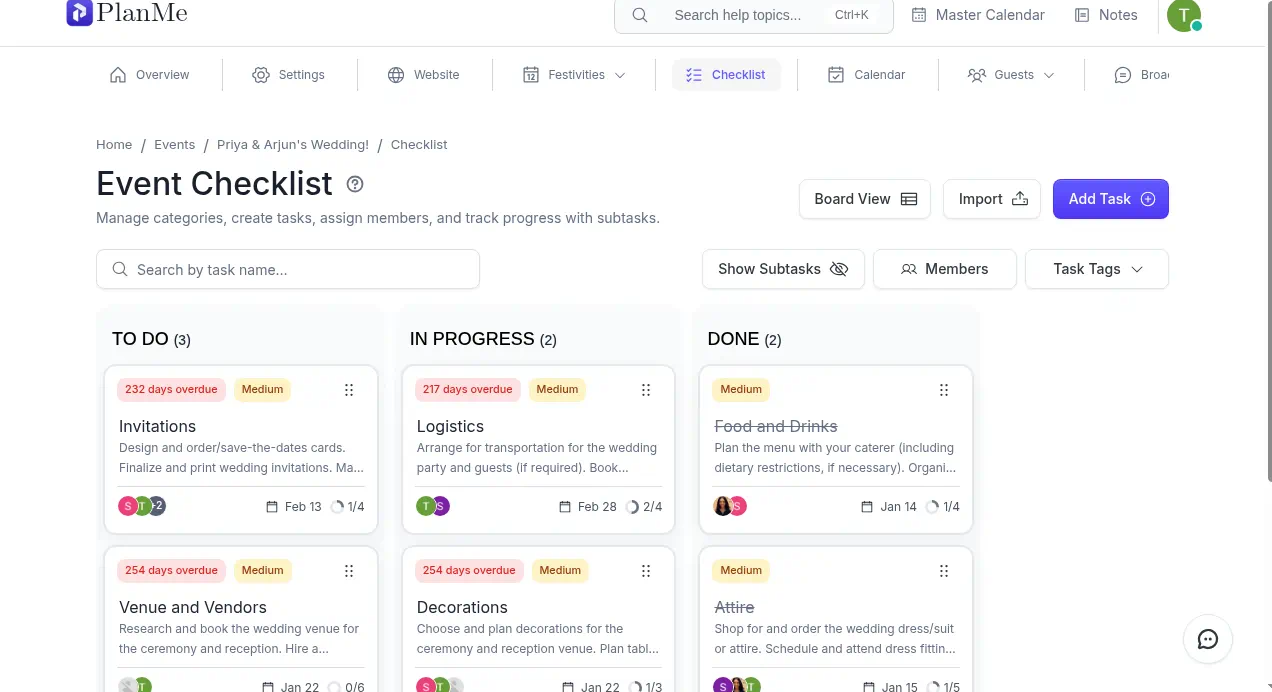
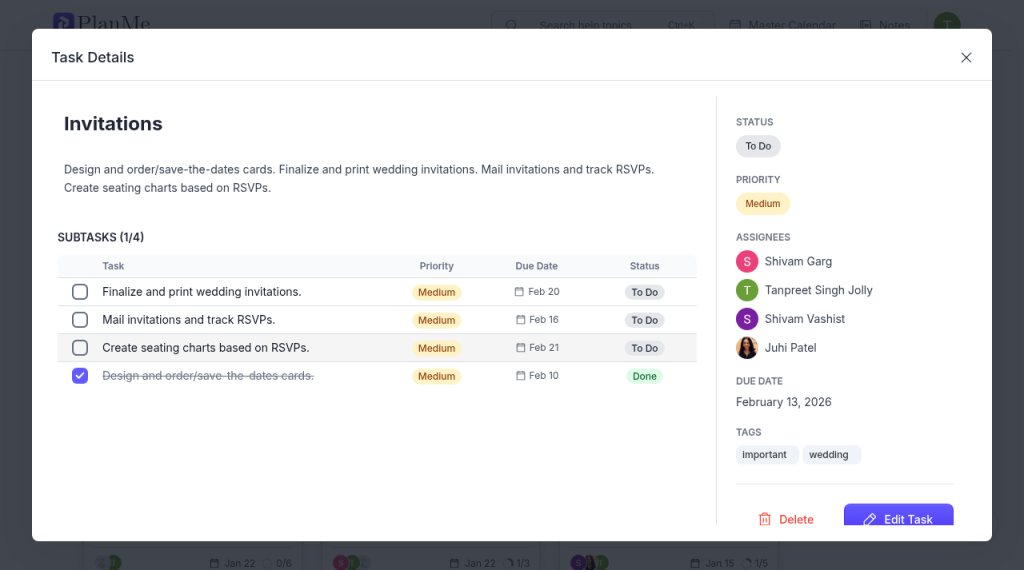
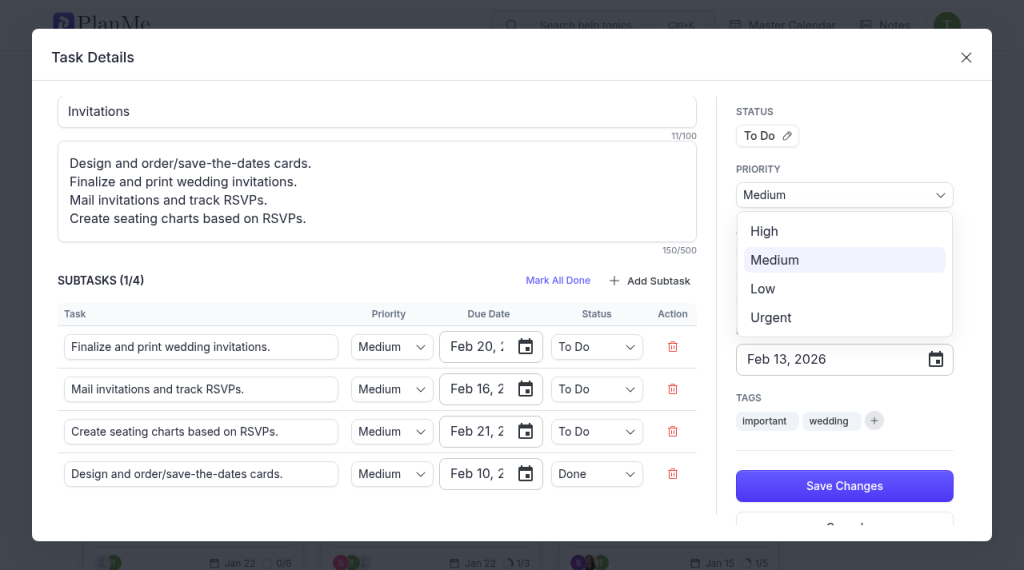
The list falls apart when the mehndi plan lives in one chat and the budget lives in someone else's head. In PlanMe, every task is a card. You drag it from To do, to In progress, to Done. Each card can carry a priority, a due date, the people responsible, and smaller subtasks, so "book the dhol" can sit under the baraat with your cousin's name on it.
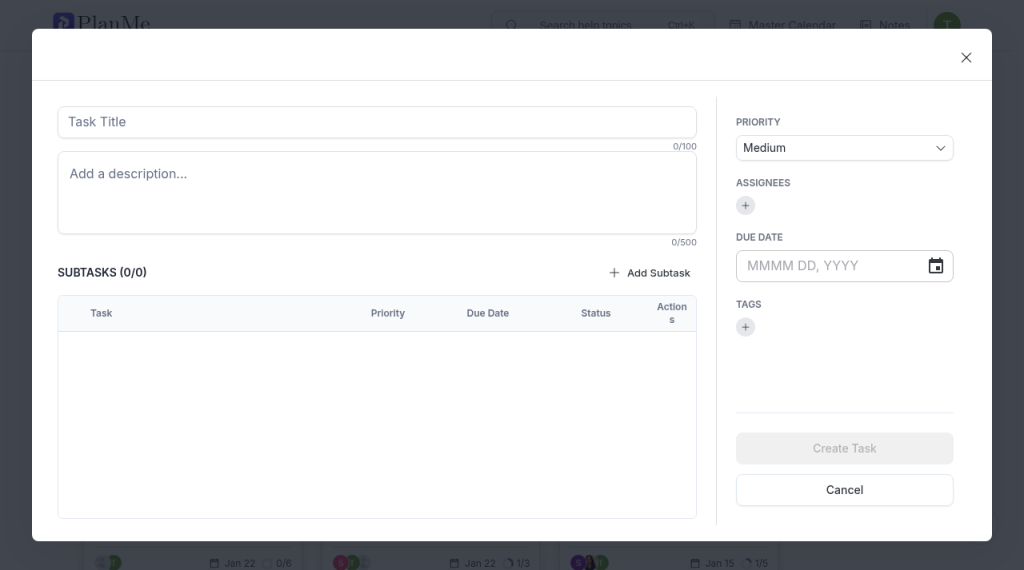
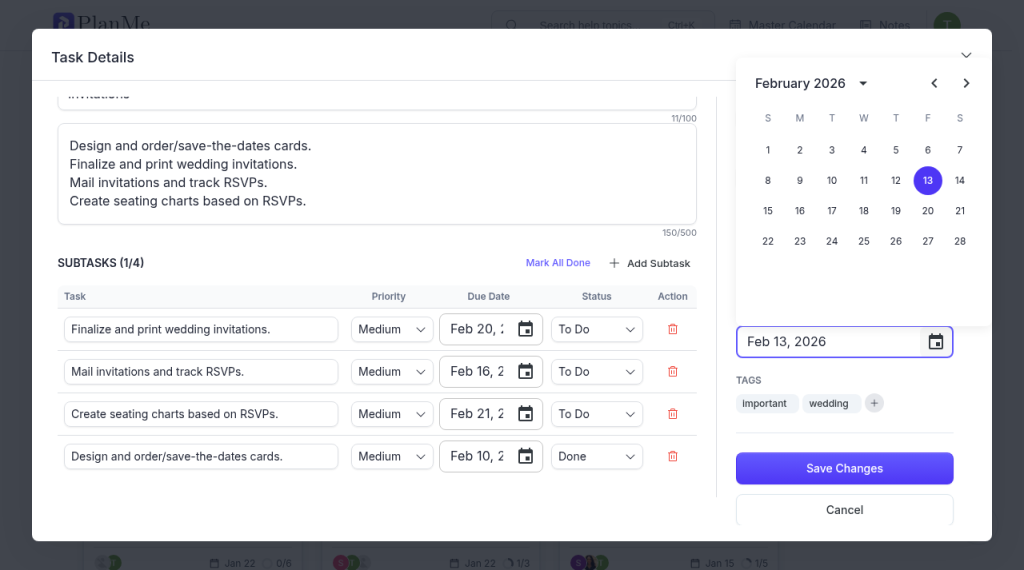
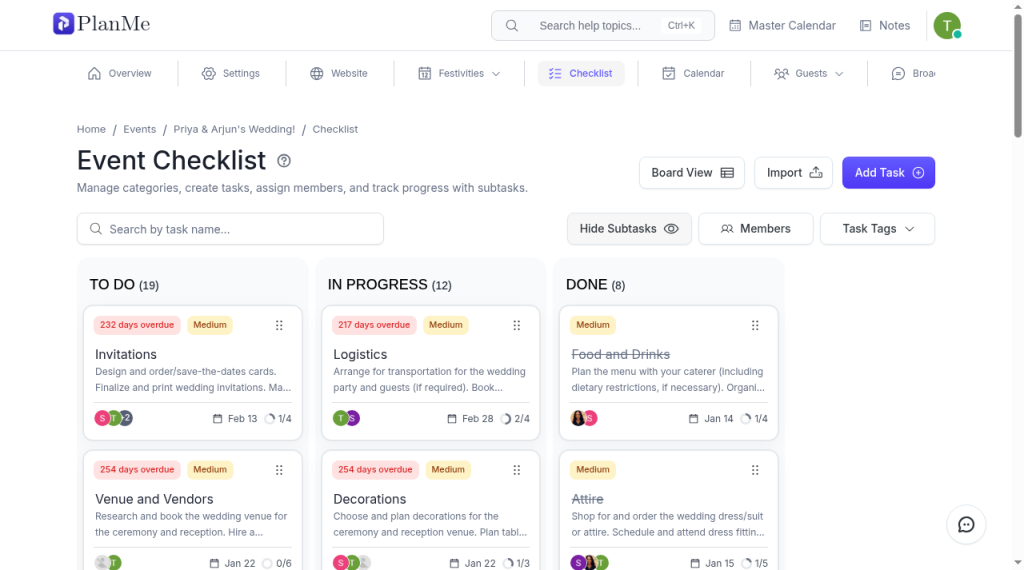
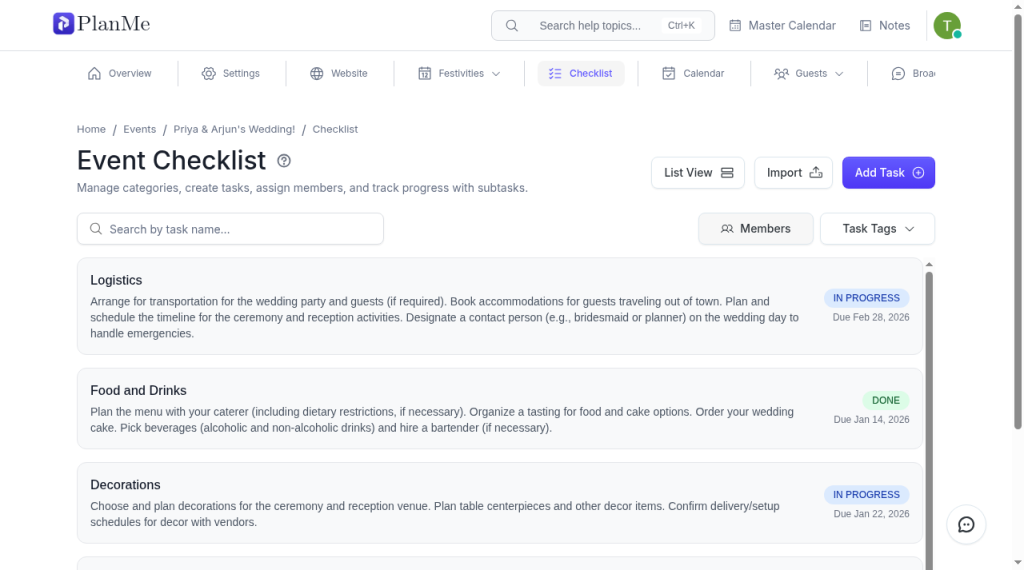
The rest of the plan sits next to the board. Each festivity has its own date, time, and place on the calendar. The wedding website holds the schedule and travel details. The guest list tracks RSVPs per festivity, and forms collect meal choices and arrival details. Reminders go out by email and SMS. Vendor quotes sit next to the budget, which tracks what each family agreed to pay, and photo moments collect the pictures guests take.
Once the bookings are done, the wedding day timeline sets the hours of the ceremony day itself. Before you lock dates, map the weekend with Indian wedding events in order, and set the money per festivity with how to budget a multi-event wedding. PlanMe is free during beta. Read who built it, see pricing, or get in touch.
Sources
- WithJoy — Wedding Planning Checklist & Timeline
- WithJoy — How to Manage Multiple Wedding Events with Different Guest Lists for Indian Weddings
- Zola — The Ultimate Wedding Planning Checklist & Timeline
- The Knot — The Ultimate Indian Wedding Planning Guide
- Maharani Weddings — Real Bride Confessions: What I Wish I Knew Before My Wedding
- ShaadiHive — Complete Indian Wedding Planning Guide
- U.S. Department of State — Global Visa Wait Times
- GOV.UK — Apply for a Standard Visitor visa
- European Commission — Applying for a Schengen visa
- r/DesiWeddings — Checklist
- r/DesiWeddings — How does one even start planning their wedding?
Common questions
What goes on a South Asian wedding checklist?
The same things as any wedding checklist (budget, guest list, venue, vendors, invitations, and day-of plans), multiplied by every festivity you host. Each festivity needs its own guest count, venue or room, food, decor, outfits, and a point person. Diaspora hosts also add hotel blocks, travel and visa help for overseas guests, and the civil marriage license.
Is this Indian wedding checklist different from a Hindu wedding planning checklist?
It covers the same ground. A Hindu wedding planning checklist adds a few ritual items: ask the pandit for muhurat dates before booking the venue, confirm the venue allows an open flame for the havan and pheras, and list the puja items, roka or engagement plans, and family roles (such as who does the kanyadaan) months ahead. Everything else, from the per-festivity guest list to hotel blocks and visas, is the same list.
How far ahead should you start planning an Indian wedding abroad?
Twelve months or more is comfortable. WithJoy notes that popular venues book 12 to 18 months ahead for peak-season Saturdays, and a multi-day Desi weekend needs several of those dates and rooms at once. If relatives need a visa to attend, start even earlier: US visitor-visa interview waits at some posts in India have run many months.
What should you book first?
Agree the budget, the festivities, and a guest count per festivity, then book the venue (or venues) and the date together. After that, the usual order is caterer, priest or officiant, photographer and videographer, decor, DJ and dhol, then hair, makeup, and mehndi artists. Outfits from South Asia need long lead times, so order them early too.
Does every festivity need its own guest list?
Yes. A haldi or a home mehndi is often close family, while the ceremony and reception are the full list. Keep one master guest list and mark which festivities each guest is invited to, so RSVPs, catering counts, and transport are counted per festivity, not once for the whole weekend.
When should overseas guests apply for visas?
As soon as the date is fixed. For the US, check the State Department's published interview wait time for the guest's consulate. The UK lets visitors apply no earlier than 3 months before travel, and Schengen countries accept applications no earlier than 6 months and no later than 15 days before the trip. Send invitation letters early enough for each of those windows.
When should invitations and RSVPs go out?
Send save-the-dates about 8 to 12 months out (earlier if guests are flying internationally), and formal invitations about 3 months out. Set the RSVP deadline 3 to 4 weeks before the first festivity, so the caterer, hotel, and transport counts are final in time.
What gets forgotten most often?
A family photo shot list, a map and shuttle times for multi-venue weekends, the civil marriage license, shagun envelopes prepared in advance, rooms for vendors and the couple, and a named point person for each festivity. Each of these comes up in the planning guides and r/DesiWeddings threads cited on this page.