On this page
Most hotel block advice is written for a one-day wedding: block rooms for Friday and Saturday, put the link on the website, done. A multi-day Indian, Pakistani or Bangladeshi wedding weekend breaks that in three ways. Guests stay more nights. Different guests stay different nights, because the mehndi list is not the reception list. And the stakes are bigger, because a contracted block across four nights carries four nights of risk.
None of the mechanics are special to South Asian weddings. Courtesy blocks, attrition, cutoff dates and resell clauses work the same way for everyone. What changes is the counting. You size the block per night, from the households who are actually travelling for the festivities on that night.
Everything below about hotel contracts comes from the sources cited inline, checked October 18, 2026. Hotel policies vary by property, so treat every number here as a question to ask, not a promise.
How does a wedding hotel block work?
You ask a hotel to hold a number of rooms for your dates at a group rate, and your guests book those rooms themselves, by a booking link or a group code, until a cutoff date. You are not paying for every guest's room. You are agreeing the rate, the dates and the terms.
The Knot's hotel block guide describes the same flow: you agree a block with the hotel's sales team or a booking platform, the hotel gives you a unique booking URL or a code, you put it on the wedding website, and guests book. While the block is open, you keep in touch with the hotel to see how many rooms have been booked and how many are left.
For a festivity weekend, write the block as nights, not a weekend. "Thursday to Monday" is three different conversations with the hotel: a few early family arrivals, a full house for the sangeet and the wedding, and a smaller group staying for the reception or a farewell brunch.
Courtesy block or contracted block: which should you choose?
Choose a courtesy block if the hotel offers one at the size you need, because unbooked rooms simply go back to the hotel at the cutoff and you owe nothing. Choose a contracted block when you need more rooms than a courtesy block allows, or a peak date where the hotel will not hold rooms without a commitment, and size it conservatively.
| Courtesy block | Contracted (attrition) block | |
|---|---|---|
| What you commit to | Nothing financial; rooms are held until the cutoff | A minimum share of the rooms will be booked |
| Unbooked rooms | Released at the cutoff date | You may pay for the shortfall below the minimum |
| Typical size | Smaller; some hotels cap how many rooms they will hold | Larger allotments are possible |
| Rate and perks | Group rate; fewer concessions | Often a lower rate and concessions such as a hospitality suite or an upgrade |
| Best for | Uncertain counts, local-heavy guest lists | A big out-of-town list on a busy weekend |
Real hotel terms show why the courtesy route has limits. One Staybridge Suites wedding block policy (IHG) defines a courtesy block as 10 or more rooms, caps it at 20 rooms per block, cuts the block by 25% at 60 days before the wedding, and releases unreserved rooms 30 days out. Policies like that are why a 300-guest weekend often ends up with two hotels, or with one contracted block. The Room Block Source also notes that courtesy-block rates are typically higher than contracted rates.
The Knot adds two cautions: some hotels want a minimum of 10 to 15 rooms per night before they will set up a block, and some require a nonrefundable deposit. Ask about both on the first call.
What is attrition, in plain numbers?
Attrition is how much of a contracted block you can leave unbooked without paying. If the contract says guests must pick up 80% of the room nights, the other 20% can go unbooked for free; anything below 80% is billed to whoever signed.
The Knot calls a target of 80 to 90% standard and gives an example: on a 20-room block with a 90% target, if guests book only 16 rooms you pay for two. The Room Block Source works the same math in room nights: 100 room nights at 20% attrition means guests must book at least 80.
Count in room nights, not rooms. A block of 30 rooms for three nights is 90 room nights, and the hotel measures pickup night by night. A festivity weekend is where this bites: the sangeet and wedding nights fill, and the arrival night and the last night are where the shortfall hides.
- Resell or mitigation clause. The hotel has to try to resell rooms you did not fill, so you do not pay for rooms another guest paid for. The Knot and The Room Block Source both list it as a clause to look for.
- Allowable shrinkage. The share of rooms you can release without penalty before the cutoff. The Knot suggests aiming for 10 to 20%.
- Who counts. Ask whether guests who book the same hotel outside your code count toward pickup. Many will find a cheaper rate online, and Bookend's lodging guide points out that booking outside the block matters mainly because it affects whether you hit the attrition threshold.
When is the cutoff date, and how does it fit your RSVP deadline?
The cutoff (or release) date is when unbooked rooms go back on general sale. The Knot puts the typical cutoff at 30 days before check-in; The Elite Wedding Planner says 30 to 45 days and varies by property and season. After it, guests pay whatever the hotel is charging that week, if rooms are left at all.
Put the RSVP deadline before the hotel cutoff, not after it. The Elite Wedding Planner suggests leaving about two weeks between the two to chase people who have not answered. Our guide to RSVPs for a multi-event wedding recommends one deadline for every festivity, about four weeks before the first one; if the hotel's cutoff is 30 days before check-in, move the RSVP date earlier so you get the answers first.
Then write the cutoff everywhere guests look: the details card if you print one, the wedding website's travel section, and the reminder you send a few weeks before it. The Knot also recommends setting the block up before save-the-dates go out, because the first thing people do after hearing the date is look at travel.
How many rooms should you block for a festivity weekend?
Count rooms per night, from the out-of-town households staying that night, at about one room per two adults. Then size a courtesy block to that count, or start a contracted block below it and ask to add rooms as it fills.
- Start from the guest list, not the invite count. Mark which households are travelling. Local guests and people staying with family do not need a room.
- Map each household to nights. A family invited to the mehndi, sangeet and wedding needs more nights than a reception-only couple flying in for one evening. This is why the per-festivity guest list matters for hotels as well as caterers. The order of nights is in Indian wedding events in order.
- Convert people to rooms. Mandap Chat's rooming-list playbook suggests one room per couple or elder for immediate family, one per two adults for travelling relatives, one per two to three for friends who will share, rooms for vendors who stay over, and a 10 to 15% buffer.
- Decide how much to commit. In The Knot's guide, planner Michelle Durpetti suggests planning for 80% of the guest list to need rooms on a travel-heavy wedding, and planner Lisa Jaroscak suggests cutting your estimate by 20% if the block is contracted.
- Split across hotels. Two hotels at different price points spread the risk, and the courtesy caps above often force it anyway. Keep the shuttle plan in mind: every extra hotel is another pickup stop before the baraat.
The Knot's ballpark for a 200-guest wedding is 60 to 120 rooms in a courtesy block or 40 to 80 in an attrition block if the wedding is local, and more for a destination wedding. Those ranges are wide because the honest answer depends on how many of your guests are flying in, and for how many nights.
Worked example: Anaya & Rohan's four-night block
Anaya and Rohan are our fictional showcase couple. Their weekend in Edison, New Jersey has four festivities: a mehndi, a sangeet, the wedding and the reception, on four consecutive days. Every number below is illustrative, chosen to show the method, not a benchmark.
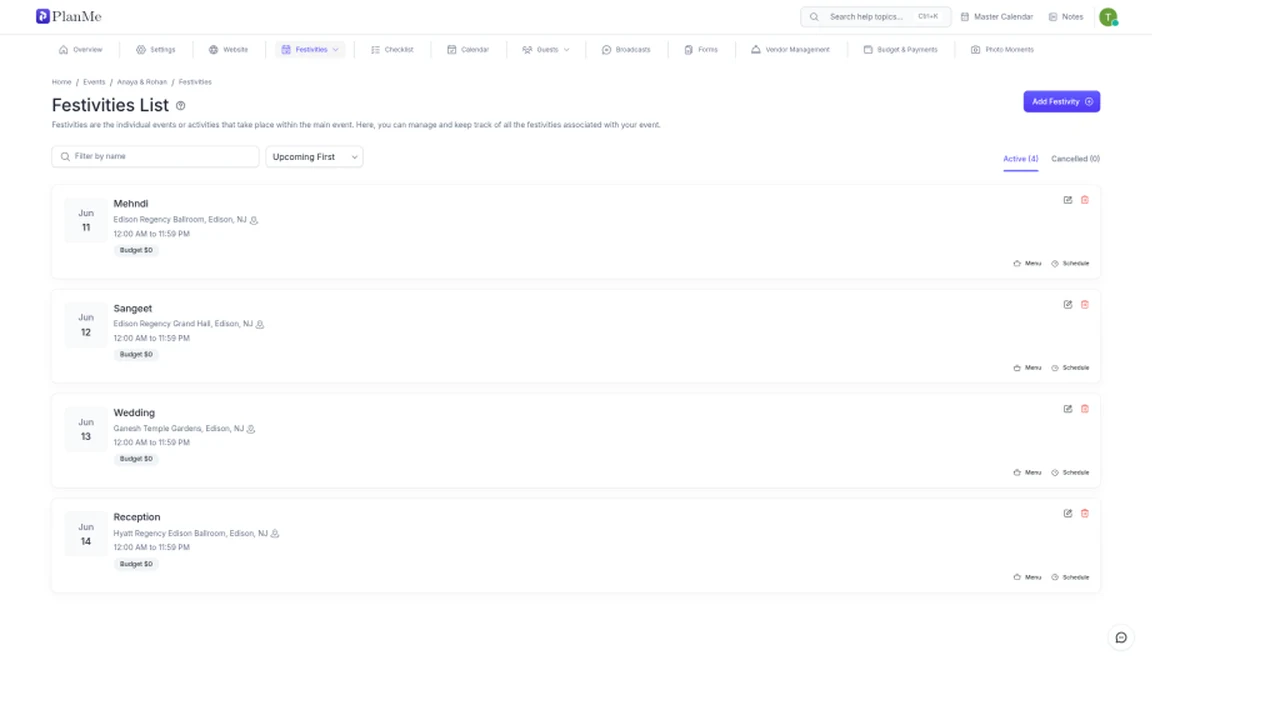
| Night | Who is staying | Rooms needed | Courtesy or contracted? |
|---|---|---|---|
| Night before the mehndi | Both immediate families, a few early-arriving elders | 12 | Courtesy; too small to risk a contract |
| Mehndi night | Families plus relatives invited to the mehndi | 30 | Contracted, sized below the estimate |
| Sangeet night | Most travelling guests arrive for the sangeet | 48 | Contracted, sized below the estimate |
| Wedding night | Everyone travelling for the wedding | 52 | Contracted, sized below the estimate |
| Reception night | Guests staying for the reception, then flying out | 26 | Courtesy at a second hotel, or a small contracted add-on |
That is 168 room nights of demand, not "52 rooms for the weekend." If Anaya and Rohan contract the three middle nights at 80% of the estimate (24, 38 and 42 rooms, or 104 room nights) with an 80% pickup target, guests need to book about 83 of those room nights, against an estimated demand of 130 on the same nights. That gap is the cushion for no-shows and for guests who book elsewhere. The arrival night and the last night stay courtesy, so a cousin who changes flights does not cost them money.
The same counting works for a two-hotel plan: the main hotel holds the families and the elders near the ceremony venue, and a second hotel holds friends at a lower rate, with a shuttle between them on the sangeet and wedding nights.
What should you ask the hotel before you sign?
Ask whether the block is courtesy or contracted, what the cutoff date is, and what happens to unbooked rooms, before you negotiate the rate. Those three answers decide how much risk you are taking.
- Is the block courtesy or contracted? If contracted, what is the pickup target and is it measured per night?
- What is the cutoff date, and is there a block reduction before it?
- Is there a deposit, and is it refundable?
- Is there a resell or mitigation clause, and an allowable shrinkage percentage?
- Do bookings made outside the group code count toward pickup?
- Will the group rate apply to guests who arrive a night early or stay a night late?
- Can elders check in early, and can the families have a late checkout after the last festivity?
- Will you send a weekly pickup report, and who is our reservations contact? (Mandap Chat lists both.)
- Is there a hospitality suite or a room for outfits and welcome bags, and can bags go into rooms before check-in?
- Where can shuttles stop, and are a baraat, a dhol or a sangeet in the hotel ballroom allowed under the same contract?
Keep the signed terms next to the quote, not in someone's inbox. A hotel block is a vendor contract with dates and money attached, and it belongs in the same place as the caterer's and the DJ's.
How do you track where every guest is staying?
Keep one row per household with the hotel, the room count, the guests in the room, check-in and check-out, and which festivities they are staying for. Then compare it with the hotel's pickup report every week until the cutoff.
- Ask for arrival and departure dates in the RSVP or a form. You need them for the block, the shuttle and the airport pickups.
- Watch accepted guests with no room. A household that has said yes to the sangeet and the wedding but has no booking two weeks before the cutoff gets a personal reminder.
- Release early, not late. If the arrival night is clearly short, release rooms within your shrinkage allowance before the cutoff.
- Send the final rooming list. The Indian wedding checklist puts this in the final weeks, alongside the transport pickup list.
Put the block on the wedding website with the hotel name, the address, the group code or booking link, and the reserve-by date. Our comparison of the best wedding websites for multiple events covers which sites have a travel or hotel page. Shuttle times from the hotel belong on the guest itinerary too; our guest weekend itinerary template has a sample.
Hotel stays in PlanMe
PlanMe does not book rooms or manage the hotel's block. Guests still book with the hotel. What PlanMe does is keep the stays next to the guest list and the festivities, inside the same event.
- Hotels. On the event's Hotel Management page you add each hotel with its address, phone number, notes, the room types it offers (for example King or Two Queens), and optional dates the rooms are available.
- A stay per household. For each party on your guest list you record the hotel, room type, number of rooms, how many guests and their names, check-in and check-out, which festivities the stay covers, and a note.
- Filter by RSVP. You can show only parties with guests who are invited, accepted or declined, so you can spot an accepted family without a room.
- Export. The stays export as a CSV (party, hotel, guests, festivities, check-in, check-out, rooms, room type, notes) that you can check against the hotel's own list.
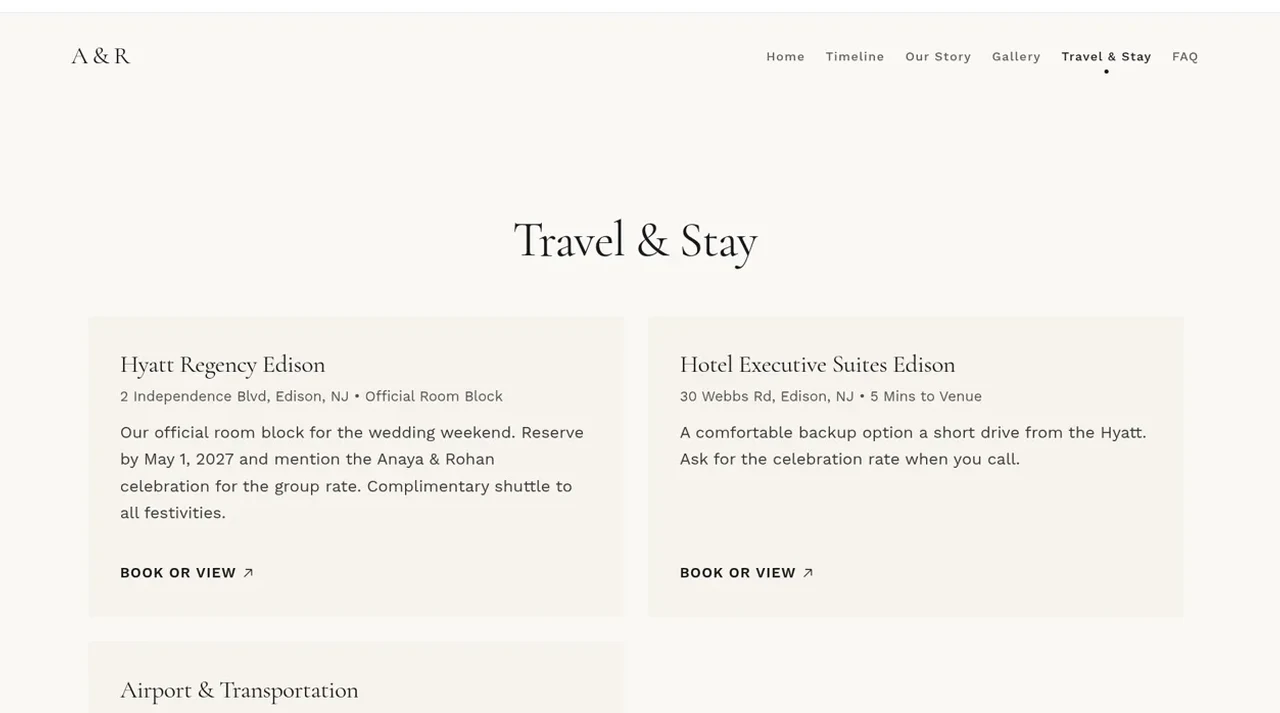
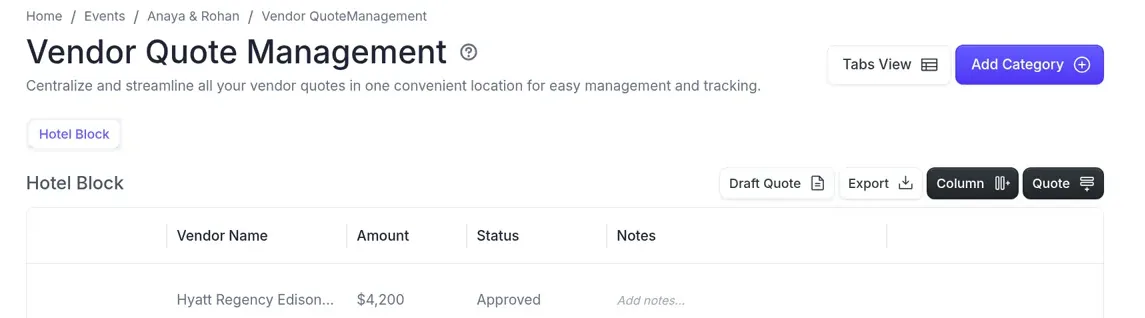
Guests see hotels on the wedding website's Travel & Stay section, where you type in the hotel, the details (rate, group code, reserve-by date) and a booking link. That section is filled in on its own; it doesn't pull from the Hotel Management list. The hotel's quote can sit in vendor quotes, and any rooms the families are paying for go in the budget.
For the weekend around the hotel, see the wedding day timeline for baraat departure times from the hotel, and how to budget a multi-event wedding for the rooms you are covering. PlanMe is free during beta. Read who built it, see pricing, or get in touch.
Sources
Checked October 18, 2026. PlanMe capabilities checked against the product.
- The Knot: How to Seamlessly Book a Hotel Room Block for Your Wedding
- Staybridge Suites (IHG): Wedding Blocks Information and Policies (PDF)
- The Room Block Source: Hotel Room Blocks FAQ
- Mandap Chat: Wedding Hotel Block for Indian Destination Weddings
- The Elite Wedding Planner: Hotel Room Block for Destination Weddings
- Bookend: Wedding guest lodging
Common questions
What is a wedding hotel block?
A wedding hotel block is a set of rooms a hotel holds for your guests at an agreed group rate. Guests book and pay for their own rooms, usually through a booking link or a group code, until the cutoff date. After the cutoff, any rooms nobody booked go back on general sale.
What is the difference between a courtesy block and a contracted block?
A courtesy block holds rooms with no financial obligation for you: unbooked rooms are simply released at the cutoff date. A contracted (or attrition) block usually comes with a larger allotment and sometimes a better rate or perks, but you agree that a minimum share of the rooms will be booked, and you may pay for the shortfall if they are not. The Knot's guide quotes planners describing exactly this split.
What does attrition mean in a hotel block contract?
Attrition is the share of a contracted block you are allowed to leave unbooked without paying. The Knot calls 80 to 90% the standard target pickup and gives the example of a 20-room block at 90%: if guests book only 16 rooms, you pay for two. Courtesy blocks have no attrition.
When is the cutoff date for a wedding room block?
The Knot puts the typical cutoff at 30 days before check-in, and some hotels release earlier. Set your RSVP deadline before the hotel's cutoff, so you can still add or release rooms once you know who is coming to which festivity.
How many hotel rooms should I block for a multi-day Indian wedding?
Count rooms per night, not per guest list. List the out-of-town households, mark the nights each one is staying (arrival night, mehndi, sangeet, the wedding and any reception or brunch), and assume roughly one room per two adults with separate rooms for elders who need them. Then size a courtesy block to that count, or start a contracted block smaller and ask to add rooms as it fills.
Does PlanMe book hotel rooms or manage the hotel's block?
No. Guests still book with the hotel. In PlanMe, the event's Hotel Management page is where you list the hotels and record each household's stay: hotel, room type, number of rooms, guests, check-in and check-out, and which festivities the stay covers. You can export those stays as a CSV to compare with the hotel's own list.